
Flag Football Rules
FCA Flag Football is built around three priorities: Safety, Fun, and Growth.
Our referees will focus on the rules that protect athletes, maintain fair competition, and keep the game moving. Officials should communicate calls clearly, briefly explain violations when needed, and avoid turning games into constant rule stoppages.
Game Format
- Games are played 6 versus 6.
- Referees will lead both teams in prayer at midfield before the game.
- The visiting team will call the coin toss.
- The winner of the coin toss may choose possession or which goal to defend.
- The team that begins the game on defense will begin the second half on offense.
- Teams switch ends of the field at halftime.
- There are no physical kickoffs or punts.
- Possessions begin at the offensive team’s 5-yard line.
- The team possessing the ball at the end of a period keeps possession when play resumes.
Game Clock
- Games are 36 minutes long.
- The clock will stop briefly for scheduled substitution periods.
- Halftime is eight minutes.
- Each team receives one 30-second timeout per half.
- Unused timeouts do not carry over.
- Teams have 30 seconds to begin their next play after the referee spots the ball.
During the final minute of each half, the clock will stop for:
- An incomplete pass
- A ball carrier going out of bounds
- A touchdown
- An extra-point attempt
- A timeout
- An official’s timeout
- A change of possession
Downs and Possession
The offensive team has four downs to cross midfield and earn a first down.
After crossing midfield, the offense receives four additional downs to score a touchdown.
If the offense does not cross midfield or score within four downs, possession changes.
Fourth-Down Options
In older divisions, a team may:
- Attempt to earn a first down or score a touchdown
- Declare a punt and give the opposing team possession at its own 5-yard line
No physical punt will take place.
Scoring
- Touchdown: 6 points
- One-point conversion: From the 5-yard line and must be a pass
- Two-point conversion: From the 10-yard line and may be a run or pass
- Safety: 2 points
Following a safety, the scoring team receives possession at its own 5-yard line.
Starting the Play
- The offense must have at least three players on the line of scrimmage.
- Only one offensive player may be in motion when the ball is snapped.
- Older divisions must snap the ball between the center’s legs.
- Younger divisions may use a side snap.
- The quarterback must clearly receive possession from the center before handing off, pitching, or passing.
A false start, multiple players in motion, or an illegal formation may result in a penalty.
Running the Football
Quarterback Runs
The player who receives the snap is considered the quarterback.
The quarterback may not run across the line of scrimmage.
The quarterback may:
- Hand the ball off
- Pitch the ball
- Throw a forward pass
After receiving a handoff or pitch, another player may run or throw a pass from behind the line of scrimmage.
Handoffs and Pitches
- Handoffs and pitches must occur behind the line of scrimmage.
- Multiple handoffs are permitted behind the line of scrimmage.
- Handoffs and laterals are not permitted after the ball crosses the line of scrimmage.
- Only the quarterback may make the initial pitch.
No-Run Zones
No-run zones are located within five yards of:
- The midfield first-down line
- The goal line
When a play begins inside a no-run zone, the ball must be passed forward beyond the line of scrimmage.
The quarterback may not run, and a running back may not run directly through the no-run area.
No-run zones do not apply to the youngest division.
Spotting the Ball
The ball is spotted where the ball carrier’s feet are located when the flag is pulled—not where the football is being held.
Passing
- The quarterback has seven seconds to throw the ball.
- If the quarterback does not pass within seven seconds, the play is ruled an incomplete pass and the offense loses the down.
- A handoff or pitch ends the seven-second count.
- Only one forward pass is permitted during a play.
- A forward pass must be thrown from behind the line of scrimmage.
- Inside a no-run zone, the pass must travel beyond the line of scrimmage.
- Intentional grounding is not permitted.
Receiving
- All six offensive players are eligible to receive a pass.
- The quarterback becomes an eligible receiver after handing off or pitching the ball.
- A receiver must control the football and have at least one foot in bounds for a completed pass.
- If a receiver catches the ball with a knee on the ground, the play is immediately dead at the location of the catch.
Quarterback Rush and Blitz Rules
- The defense may use one immediate blitz during each set of four downs.
- Only one defensive player may rush the quarterback on an immediate blitz.
- On all other plays, defenders must wait until the referee completes the seven-second count before crossing the line of scrimmage.
- Once the seven-second count is completed, any number of defensive players may rush the quarterback.
A defender who begins a rush from inside the seven-yard rush line will be called for an illegal rush.
Interceptions and Turnovers
- Interceptions may be returned.
- An interception made in the end zone may be returned.
- If the interceptor’s flag is pulled inside the end zone, the play results in a touchback and the ball is placed at the 5-yard line.
Bad Snaps and Fumbles
- The ball remains live following a bad or botched snap.
- A loose ball may be recovered by either the offense or defense.
- Once a player gains possession of the loose ball by falling on it, the play is immediately dead at the spot of recovery. The player may not advance the ball.
- If the offense recovers the ball, it retains possession and the next down begins from the recovery spot.
- If a defensive player recovers the ball, the play remains live and the player may advance it until their flag is pulled, they step out of bounds, or they score.
Dead-Ball Situations
The play is over when:
- The ball carrier’s flag is pulled
- The ball carrier’s flag falls out
- The ball carrier steps out of bounds
- The ball carrier’s knee touches the ground
- The football touches the ground
- A pass is incomplete
- A touchdown or safety is scored
- The referee blows the whistle
Contact and Blocking
FCA Flag Football is a limited-contact sport.
Players may not:
- Tackle
- Push
- Hold
- Shove
- Stiff-arm
- Lower a shoulder into an opponent
- Initiate unnecessary contact
- Pull or grab clothing
- Make contact with a receiver while the ball is in the air
Offensive players may shield a defender by maintaining their position, but they may not initiate contact with their hands or arms.
Any dangerous or unnecessary contact should be called immediately.
Flag Guarding
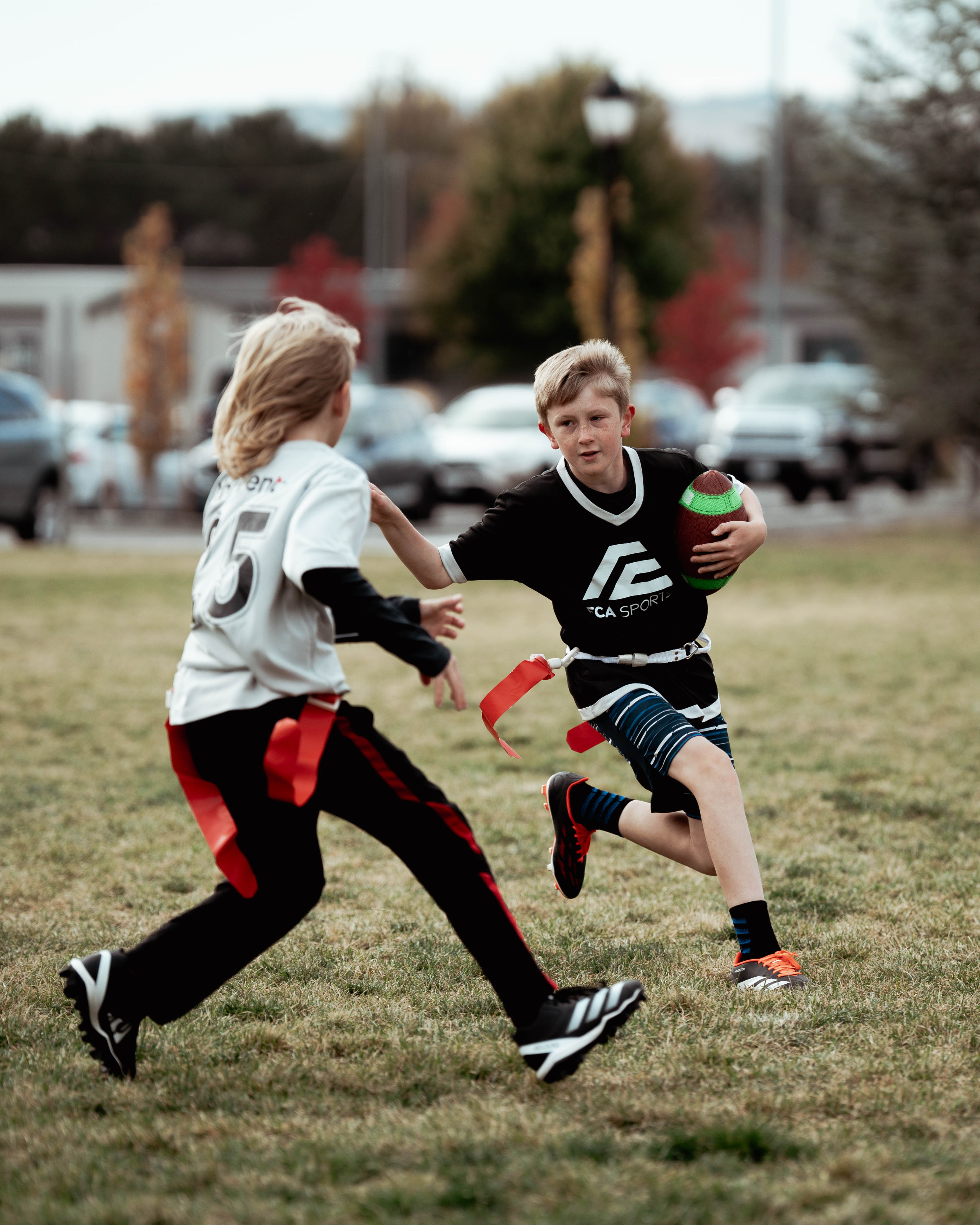
The ball carrier may not use a hand, arm, elbow, or the football to prevent a defender from pulling a flag.
Flag guarding may be intentional or unintentional.
Examples include:
- Swatting a defender’s hand away
- Holding an arm over the flag
- Stiff-arming
- Lowering the football over the flag belt
- Spinning with an arm extended to block access to the flag
Diving
Ball carriers may not dive toward:
- The end zone
- The first-down line
- A defender
A player may jump to avoid a collision, but may not dive forward to gain additional yardage.
Pass Interference
Defensive Pass Interference
A defender may not:
- Push or hold a receiver
- Make early contact before the ball arrives
- Pull a receiver’s flag before the catch
- Prevent a receiver from making a play on the ball through illegal contact
Defenders may make a play on the football but must avoid unnecessary contact with the receiver.
Offensive Pass Interference
An offensive player may not:
- Push a defender away
- Hold a defender
- Create an illegal pick or screen
- Initiate contact to create separation
Primary Penalties
Referees should focus on clear and meaningful violations that affect safety or give a team an unfair advantage.
Defensive Penalties
- Encroachment
- Illegal rushing
- Pass interference
- Holding, pushing, or illegal contact
- Pulling a receiver’s flag before the catch
Offensive Penalties
- False start
- More than one player in motion
- Illegal formation
- Quarterback crossing the line of scrimmage
- Running inside a no-run zone
- Illegal forward pass
- Delay of game
- Flag guarding
- Stiff-arming or illegal use of the hands
- Offensive pass interference
- Diving
- Illegal blocking
Penalties occurring near the end zone may be enforced at half the distance to the goal.
Player Conduct
Players, coaches, and spectators are expected to demonstrate respect and self-control.
The referee may stop the game and contact the site coordinator when there is:
- Dangerous or aggressive play
- Repeated intentional fouling
- Inappropriate language
- Disrespect toward an official
- Continued misconduct by a player, coach, or spectator
Athlete safety is always more important than keeping the game moving.
Referee Approach
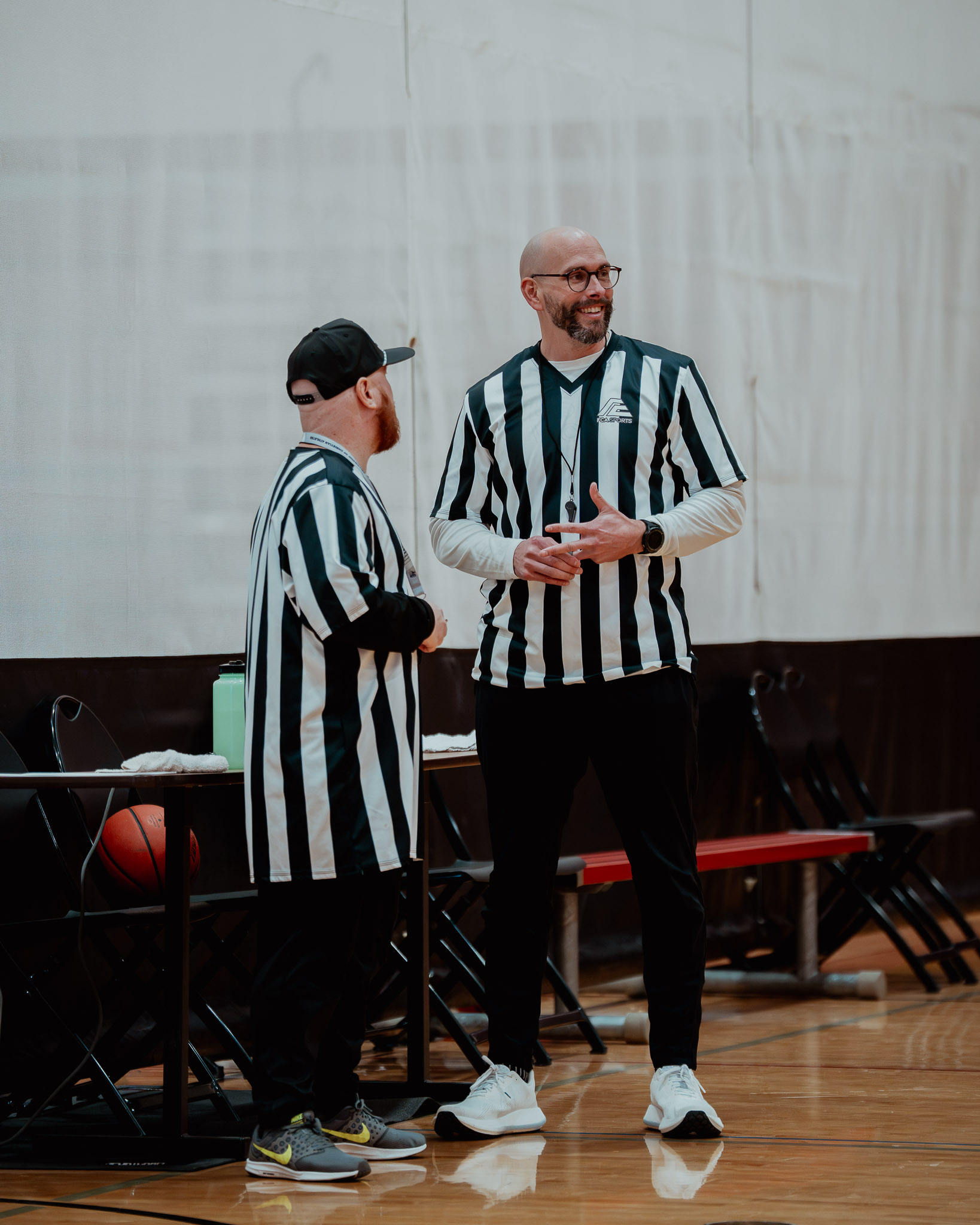
Our referees are learning and developing just like our athletes.
Officials are expected to:
- Prioritize athlete safety
- Call clear violations
- Communicate confidently and respectfully
- Briefly explain calls when helpful
- Keep the game moving
- Remain consistent for both teams
- Ask the site coordinator for help when uncertain
Referees should not guess at an FCA-specific rule. If there is uncertainty, play should be paused while the referee checks with the lead referee or site coordinator.