

Fall Sports Game Day

Troy FarleyFCA Sports Leagues Director
September 11, 2026

4 Minute Read

Coaches,

Tomorrow is GAME DAY!

This is the day we get to step back a little and let the kids truly PLAY.

My challenge for every one of us tomorrow is simple:

BE THE THERMOSTAT.

Help me set the right temperature for your athletes and families.

See the opposing coach as a partner, not an opponent. Don’t overcoach. Let your players play. Let them make mistakes. Let them figure some things out.

Constantly being loud from the sideline does not mean good coaching is taking place.

Teach during the week. Encourage on Game Day. There will certainly be moments to coach, but give these kids room to compete, make decisions, make mistakes, and grow.

PRE-GAME ROUTINE

This applies to every team—younger soccer, older soccer, and flag football.

10 MINUTES BEFORE KICKOFF — COACH + REF MEETING

Meet with the opposing coach and referee.

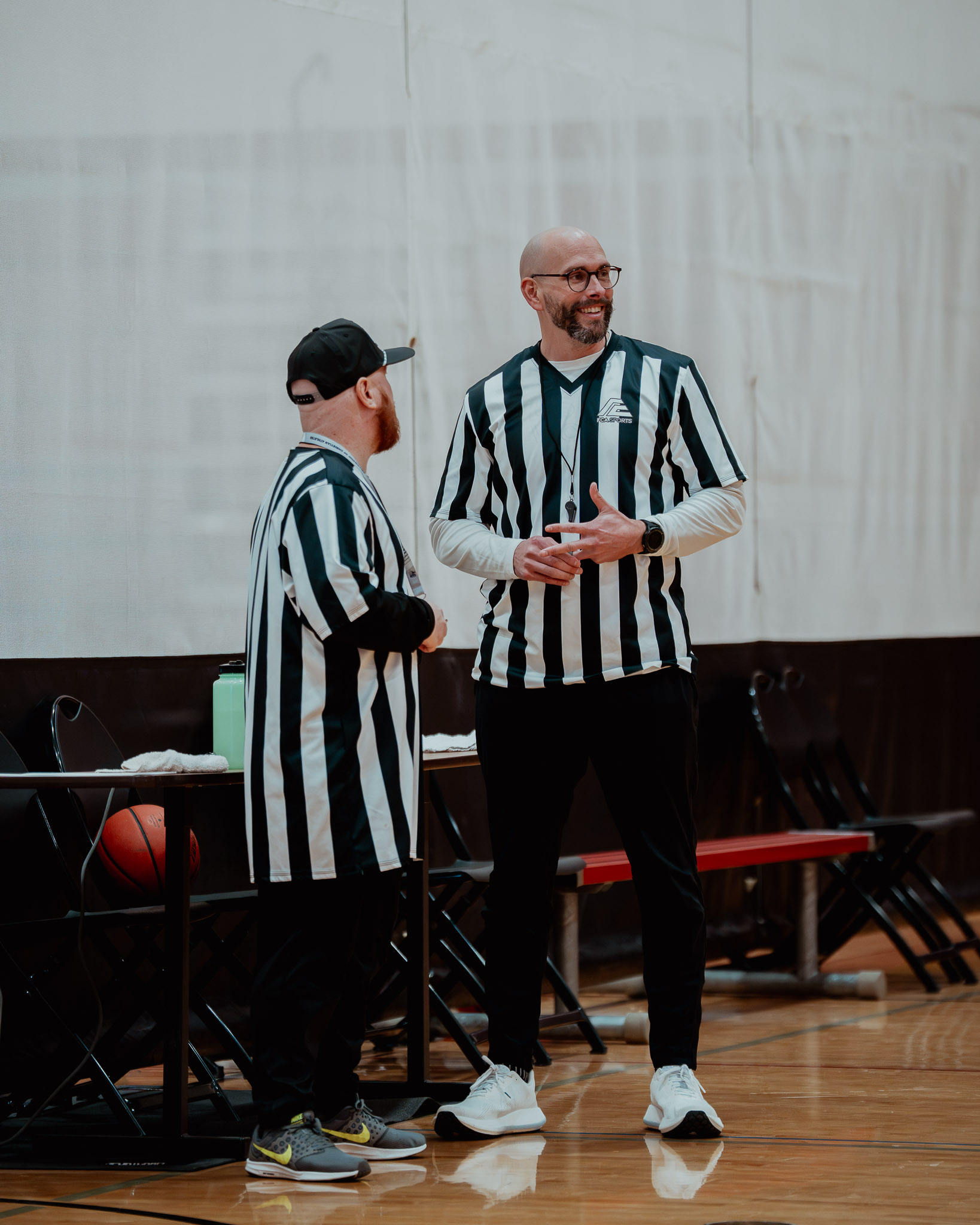
For 4–7 Soccer, remember that the coaches are also the referees.

Take a minute to:

  • Greet and introduce yourselves.
  • Connect on any questions before the game.
  • Say a quick prayer for one another.
  • Remind yourselves that we're working together to create a great experience for these kids.
5 MINUTES BEFORE KICKOFF — FCA BREAK

Bring both teams and coaches together at center field.

As ONE group, do an FCA BREAK on 3!

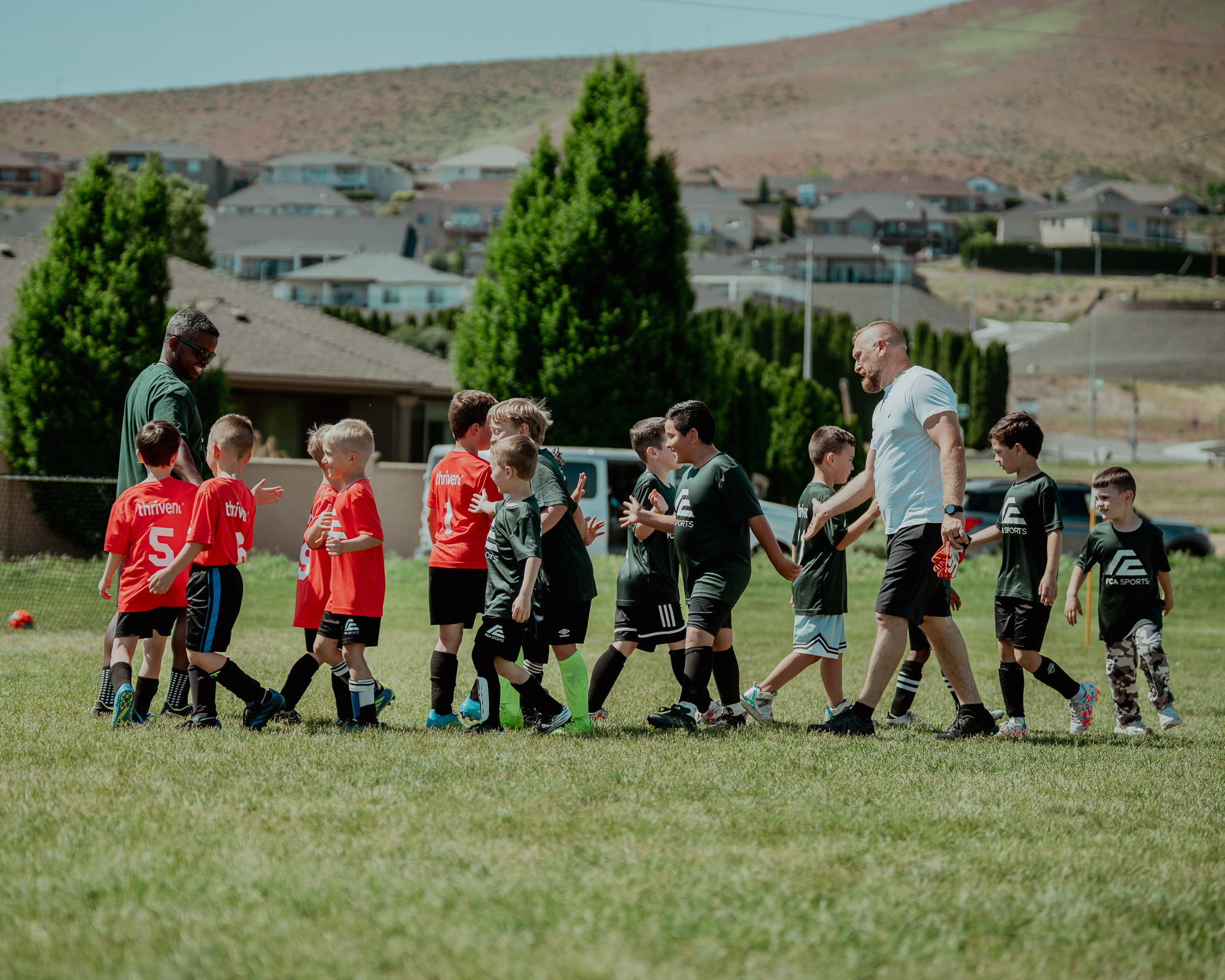
Then both teams take a lap around the field, high-fiving the parents and families along the way.

FLAG FOOTBALL: Our cheer athletes will form a tunnel for you to run through after the FCA Break before beginning your lap around the field.

Once the lap is complete, LET'S PLAY!

POST-GAME ROUTINE

How we finish matters just as much as how we start.

  1. Celebrate the other team.
    Gather your team and on 1-2-3 yell the other team's name.
  2. Good Game Line.
    Both teams meet and go through the traditional post-game line.
  3. Circle Up + Pray.
    Bring both teams together and end the game in prayer.

We encourage an athlete to lead the prayer. Give them the opportunity! If no athlete wants to step up, one of the coaches can lead.

Win or lose, we leave the field together.

KNOW YOUR RULES

Please take a few minutes TODAY to review the rules for your sport and age division before tomorrow's first game.

These rules pages will remain LIVE throughout the season, so bookmark them and use them as a reference whenever you need them.
September 5, 2026
Soccer Rules
September 5, 2026
Flag Football Rules

WEEK 1 = LOTS OF GRACE

Coaches, this is Week 1 of games.

Please bring LOTS OF GRACE tomorrow.

  • Athletes are learning.
  • Parents are learning.
  • Coaches are learning.

And our young referees are learning too.

Please refrain from complaining about missed calls or calls you disagree with. Our referees are going to miss things. That's part of youth sports, especially in Week 1.

If you're frustrated with something that happens during a game, come to me. Let me handle it.

  • Don't let one call change your sideline.
  • Don't let frustration change your body language.
  • Don't let the temperature rise because something didn't go your way.

I'll say it one more time:

YOU ARE THE THERMOSTAT.

Your players and families will feed off your energy, your demeanor, and your response.

Tomorrow, let's set the temperature together.

Encourage. Celebrate. Compete. Have fun. Let them PLAY.

Let's have an incredible first Game Day!

Meet The Team

  • Troy Farley (509-430-7222) — FCA Sports League Director — tfarley@fca.org
  • Zach Lewison (641-590-4900) — Associate Director & Bethel Game Day Coordinator — zlewison@fca.org
  • Amber Lewis — Operations Coordinator — amberlewis@fca.org
  • Hannah Fiocchi — Volunteer Coordinator — hfiocchi@fca.org
  • Preston Jonas (509-619-2748) — Flag Football Game Day Coordinator — prestonjonas123@gmail.com

Win The Day,

Troy Farley

FCA Sports Leagues Director

Up Next
From this Author: Troy Farley
September 13, 2026
The Ray Files: Fall 2026 — Volume 2
September 12, 20264 Minute Read
Parent Corner #31: Your Suitcase Was Never Supposed to Have Wheels
Parent Corner #31 — Your Suitcase Was Never Supposed to Have Wheels There is a word I have grown to dislike. Convenience. We love it. Faster. Easier. Delivered. Automated. Anything that removes another obstacle from our day. And then I heard Sylvester Stallone—one of my heroes—talking about how much easier life continues to become. His example made me laugh. Suitcases have wheels now. Something designed to be carried doesn't even have to be carried anymore. His bigger point stuck with me: Force yourself into tough situations. And it got me thinking about our kids. About sports. About FCA Sports. And about growth. Because convenience and growth rarely travel together. We Aren't Trying to Make Everything Easy I'll say something that might sound strange coming from someone who runs youth sports: Convenience is not one of our goals at FCA Sports. Of course, we want to communicate clearly. We want to be organized. We want to serve families well. But our mission isn't to remove every difficult thing from the experience. Not for our athletes. Not for our coaches. Not for our parents. Because growth is rarely convenient. Sometimes practice is at a difficult time. Sometimes the weather isn't perfect. Sometimes your child gets a coach who challenges them. Sometimes they don't play the position they wanted. Sometimes they lose. Sometimes the official misses the call. Sometimes they have to sit on the bench. Sometimes they have to apologize to a teammate. Sometimes they have to keep showing up when they'd rather quit. And our first instinct can be: How do I make this easier? Maybe that's the wrong question. Maybe we should ask: What could God grow through this? Jesus Never Promised Convenient Following Jesus has never been about finding the easiest road. Jesus actually said: "If any of you wants to be my follower, you must give up your own way, take up your cross daily, and follow me." Luke 9:23 Take up your cross. Follow me. There isn't much convenience in those words. Jesus wasn't calling people toward comfort. He was calling them toward something worth giving their lives to. And I think there's something incredibly important there for our kids. We don't need to manufacture hardship. Life will provide plenty of it. But we also don't need to remove every ounce of resistance from their lives. Because resistance can build something. Perseverance. Discipline. Courage. Faith. Character. Growth. Meet Ray Ray hated conditioning. His coach blew the whistle. "One more!" Ray put his hands on his knees. His legs hurt. His lungs burned. And he had already decided the last sprint was supposed to be the last sprint. "Come on, Ray!" Zach yelled. Ray looked toward Coach. For half a second, he hoped Coach would tell him he had done enough. Coach didn't. He just pointed toward the line. Ray stood up. He ran. It wasn't his fastest. It definitely wasn't pretty. But he finished. Walking off the field later, Ray told his dad, "That was hard." Dad smiled. "I know." Ray waited for something else. Nothing. Finally Ray asked, "That's it?" Dad laughed. "Yep." Then he put his hand on Ray's shoulder. "Not everything hard needs to be made easier." Ray thought about that one all the way home. Takeaway Parents, I wonder if sometimes we're putting wheels on things our kids were meant to learn how to carry. We call the coach. We solve the conflict. We make the excuse. We remove the consequence. We carry the bag. And yes—there are absolutely times our kids need us to step in. But there are also times they need us to step back. To encourage. To listen. To remind them they can keep going. And maybe even allow something to remain hard. Because someday the challenges will be bigger than youth sports. There won't always be a parent standing on the sideline who can make it easier. That's why this matters now. Sports give us a training ground for life. A place to practice doing difficult things before the stakes get much higher. So this week, before removing an obstacle from your child's path, maybe ask: Does this need to be fixed? Or... Does this need to be carried? Because your suitcase was never supposed to have wheels. And maybe... Neither was everything in your child's life. More than a league. It's a mission. Win The Day, Troy Farley FCA Sports Leagues Director
September 11, 20265 Minute Read
The Parent Standard
The FCA Sports Parent Standard FCA Sports exists to provide a safe, positive, and Christ-centered environment where athletes can grow physically, mentally, relationally, and spiritually. Parents help set the tone. The way we encourage, communicate, and respond teaches our athletes what matters most. Our priorities are: Safety. Fun. Growth. Our Ultimate Foundation Represent Jesus in every word, every reaction, and every relationship. “Whatever you do, whether in word or deed, do it all in the name of the Lord Jesus.” — Colossians 3:17 Our Five Parent Pillars 1. Encourage Loudly. Never Tear Down. Our sidelines should be filled with joy, energy, and encouragement. Celebrate effort, teamwork, courage, and growth. Never use your voice to embarrass, criticize, or place unnecessary pressure on an athlete. “Do not let any unwholesome talk come out of your mouths, but only what is helpful for building others up.” — Ephesians 4:29 2. Respect Everyone—Especially Under Pressure. Treat athletes, coaches, referees, FCA staff, opposing teams, and other parents with dignity. Competition never gives us permission to insult, intimidate, argue, or tear someone down. “Be devoted to one another in love. Honor one another above yourselves.” — Romans 12:10 3. Let Coaches Coach and Referees Officiate. Encourage your athlete without coaching from the sideline. Allow coaches to lead and referees to make calls. Many FCA Sports referees are young people developing communication, confidence, command, and leadership skills. They will not make every call perfectly. Neither will our athletes or coaches. Parents may not yell at, argue with, insult, or approach a referee to dispute a call. “Everyone should be quick to listen, slow to speak and slow to become angry.” — James 1:19 4. Protect the Athlete Experience. Our games belong to the athletes. Follow sideline boundaries, remain in designated spectator areas, and never allow adult emotions to take away an athlete’s safety, joy, or opportunity to grow. “Not looking to your own interests but each of you to the interests of the others.” — Philippians 2:4 5. Keep the Mission Bigger Than the Score. We want to compete, improve, and pursue excellence—but winning is not the ultimate goal. Every game is an opportunity to help athletes grow and show families something different in the way FCA Sports competes and serves. “Whatever you do, do it all for the glory of God.” — 1 Corinthians 10:31 Game-Day Expectations As an FCA Sports parent or guardian, I will: Bring a positive attitude. Encourage athletes from the sideline. Allow coaches to coach and referees to officiate. Treat everyone with dignity and respect. Use appropriate and positive language. Remain calm when I disagree with a decision. Communicate concerns directly and respectfully. Follow all facility and spectator boundaries. Place athlete safety and growth above the outcome of the game. Respecting Coaches Our coaches are volunteers who give their time to serve athletes and families. Parents should encourage without giving coaching instructions from the sideline. Multiple voices create confusion and unnecessary pressure for athletes. Questions should be discussed with the coach privately and at an appropriate time—not during the game or in front of athletes. Respecting Referees Parents and spectators may not: Yell at or argue with a referee. Make insulting or inappropriate comments. Question a referee’s character or integrity. Approach a referee to dispute a call. Encourage an athlete to disrespect an official. Questions involving rules, safety, or serious concerns should be brought calmly to the site coordinator or FCA staff. Respecting Opposing Families Competition should never become personal. Parents may not taunt, mock, intimidate, or argue with opposing athletes, coaches, or families. We can compete hard without tearing someone else down. Soccer Sideline Expectations Stay Away From the Goals Parents and spectators may not stand or sit beside or behind either goal. All spectators must remain in the designated viewing area along the sideline. This protects the athletes, gives referees a clear view, and prevents distractions behind the goal. Parent Side and Athlete Side For our older soccer divisions serving athletes ages 8–12: One side of the field is reserved for athletes and coaches. The opposite side is reserved for parents and spectators. Parents may not stand or gather on the athlete side. Spectators must stay away from team areas, corner areas, and both goals. This separation helps athletes focus, allows coaches to lead, and creates a safer and more organized environment. Communicating a Concern We want parents to communicate with us. Concerns should be handled calmly, directly, and at the appropriate time. Unless there is an immediate safety concern: Allow the game or practice to finish. Avoid addressing the issue in front of athletes or other families. Speak privately with the coach, site coordinator, or FCA staff. Email the League Director Troy Farley @tfarley@fca.org Focus on facts, safety, and possible solutions. Allow FCA Sports time to gather information and respond. When emotions rise, pause, lower your voice, and remember who is watching. Accountability Behavior that does not meet the FCA Sports Parent Standard may result in: A reminder or warning A conversation with FCA staff Removal from the playing area Suspension from future games Removal from the league in serious or repeated situations Any behavior that threatens the safety of an athlete, coach, referee, staff member, or family will be addressed immediately. The Standard We Carry Encourage loudly. Respect everyone. Trust the leaders. Protect the athletes. Keep the mission bigger than the score. Above it all: Represent Jesus in every word, every reaction, and every relationship. Every game should finish with athletes feeling safe, coaches feeling supported, referees feeling respected, and families seeing something different in the way FCA Sports competes and serves. Meet The Team Troy Farley — FCA Sports League Director — tfarley@fca.org Zach Lewison — Associate Director & Bethel Game Day Coordinator — zlewison@fca.org Amber Lewis — Operations Coordinator — amberlewis@fca.org Hannah Fiocchi — Volunteer Coordinator — hfiocchi@fca.org Preston Jonas — Flag Football Game Day Coordinator — prestonjonas123@gmail.com
Currently Reading
September 11, 20264 Minute Read
Fall Sports Game Day
Coaches, Tomorrow is GAME DAY! This is the day we get to step back a little and let the kids truly PLAY. My challenge for every one of us tomorrow is simple: BE THE THERMOSTAT. Help me set the right temperature for your athletes and families. See the opposing coach as a partner, not an opponent. Don’t overcoach. Let your players play. Let them make mistakes. Let them figure some things out. Constantly being loud from the sideline does not mean good coaching is taking place. Teach during the week. Encourage on Game Day. There will certainly be moments to coach, but give these kids room to compete, make decisions, make mistakes, and grow. PRE-GAME ROUTINE This applies to every team—younger soccer, older soccer, and flag football. 10 MINUTES BEFORE KICKOFF — COACH + REF MEETING Meet with the opposing coach and referee. For 4–7 Soccer, remember that the coaches are also the referees. Take a minute to: Greet and introduce yourselves. Connect on any questions before the game. Say a quick prayer for one another. Remind yourselves that we're working together to create a great experience for these kids. 5 MINUTES BEFORE KICKOFF — FCA BREAK Bring both teams and coaches together at center field. As ONE group, do an FCA BREAK on 3! Then both teams take a lap around the field, high-fiving the parents and families along the way. FLAG FOOTBALL: Our cheer athletes will form a tunnel for you to run through after the FCA Break before beginning your lap around the field. Once the lap is complete, LET'S PLAY! POST-GAME ROUTINE How we finish matters just as much as how we start. Celebrate the other team. Gather your team and on 1-2-3 yell the other team's name. Good Game Line. Both teams meet and go through the traditional post-game line. Circle Up + Pray. Bring both teams together and end the game in prayer. We encourage an athlete to lead the prayer. Give them the opportunity! If no athlete wants to step up, one of the coaches can lead. Win or lose, we leave the field together. KNOW YOUR RULES Please take a few minutes TODAY to review the rules for your sport and age division before tomorrow's first game. These rules pages will remain LIVE throughout the season, so bookmark them and use them as a reference whenever you need them.SOCCER RULESFLAG FOOTBALL RULES WEEK 1 = LOTS OF GRACE Coaches, this is Week 1 of games. Please bring LOTS OF GRACE tomorrow. Athletes are learning. Parents are learning. Coaches are learning. And our young referees are learning too. Please refrain from complaining about missed calls or calls you disagree with. Our referees are going to miss things. That's part of youth sports, especially in Week 1. If you're frustrated with something that happens during a game, come to me. Let me handle it. Don't let one call change your sideline. Don't let frustration change your body language. Don't let the temperature rise because something didn't go your way. I'll say it one more time: YOU ARE THE THERMOSTAT. Your players and families will feed off your energy, your demeanor, and your response. Tomorrow, let's set the temperature together. Encourage. Celebrate. Compete. Have fun. Let them PLAY. Let's have an incredible first Game Day! Meet The Team Troy Farley (509-430-7222) — FCA Sports League Director — tfarley@fca.org Zach Lewison (641-590-4900) — Associate Director & Bethel Game Day Coordinator — zlewison@fca.org Amber Lewis — Operations Coordinator — amberlewis@fca.org Hannah Fiocchi — Volunteer Coordinator — hfiocchi@fca.org Preston Jonas (509-619-2748) — Flag Football Game Day Coordinator — prestonjonas123@gmail.com Win The Day, Troy Farley FCA Sports Leagues Director

September 9, 2026
The Ray Files: Fall 2026 — Volume 1
September 6, 20264 Minute Read
Fall Soccer
FCA Coach's Corner | Week 3 Coaches, We are officially two weeks into the season! Thank you for the way you've jumped in, adjusted, learned your teams, and started building relationships with your athletes and families. We're getting into the rhythm now—and this is where the season really starts to take shape. THIS WEEK: STAY TEACHABLE Our Growth Mindset journey this season is: Learn → Trust → Serve → Teach While we're in Week 3 of our soccer season, we're in Week 2 of our Growth Mindset devotional, which means we're still focused on that first step: LEARN. This week, our athletes are learning that growth isn't about pretending to have everything figured out. It's about being honest enough to admit we still have room to grow and staying teachable when someone helps us get better. Here's the line I want us carrying into this week: “A closed heart stays stuck. A teachable heart keeps growing.” That's a great lesson for our athletes, but it's also a great reminder for us as coaches. Keep listening. Keep learning. Keep adjusting. We never stop learning, growing, and teaching. WEEK 2 GROWTH MINDSET HUDDLE Please continue making your Growth Mindset Huddle a priority at every practice. This week's Huddle focuses on progress over perfection. Our athletes don't have to pretend they have everything figured out. Neither do we. Help them understand that a teachable athlete: Listens. Learns. Takes coaching. Makes adjustments. Keeps growing. Don't let the Huddle become the thing you squeeze in if there's time. It's part of why we're here. Our mission: To see every coach, athlete, and FAMILY be in a growing relationship with Jesus and His Church. UNIFORMS Most of you have now received your team uniforms to hand out to your athletes. If you haven't received yours yet, you will be getting them this week. COACHES: If you have uniform needs—wrong sizes, missing uniforms, additional needs, etc.—and you have not already communicated those needs to me, I need you to TEXT ME ASAP. Troy: 509-430-7222 Please don't assume we know what your team is missing. Help us get ahead of it by communicating your needs as soon as possible. AGES 4–7: PLEASE SHUT THE TRAILER A quick but important reminder for our 4–7 divisions practicing at Bethel: The equipment trailer has been left open after the 5:30 final practice window. If you are one of the final teams practicing, please make sure the trailer is completely shut and secured before you leave each night. It takes just a minute and helps us tremendously. Thank you for helping us take care of our equipment and facilities. TEAM PHOTOS Rob Palmer, our FCA Sports photographer, will be reaching out directly to coaches to schedule your team photo time for the upcoming weeks. You do not need to contact Rob. Rob will contact YOU. Once your time is scheduled, please communicate that information clearly with your families. VOLUNTEER ONBOARDING If your FCA volunteer onboarding is still incomplete, please get this finished. Hannah is continuing to follow up with coaches who have outstanding steps. Please respond to her and help us get everyone across the finish line. This is an important part of providing a safe and prepared environment for every athlete and family. KEEP BUILDING We're two weeks in. The newness is starting to wear off, and that's actually when some of the best coaching begins. Keep learning names. Keep connecting with parents. Keep making practice fun. Keep Huddling. Keep encouraging. Keep pointing kids toward Jesus. And remember this week: A closed heart stays stuck. A teachable heart keeps growing. Let's model that for our athletes. MEET YOUR FCA SPORTS TEAM We're here to serve you throughout the season. If you have questions or need help, reach out. Troy Farley — Leagues Director tfarley@fca.org | 509-430-7222 Zach Lewison — Associate Director zlewison@fca.org | 641-590-4900 Amber Lewis — Operations Coordinator amberlewis@fca.org Hannah Fiocchi — Volunteer Coordinator hfiocchi@fca.org Preston Jonas — Flag Football Coordinator prestonjonas123@gmail.com You're not coaching alone. We're in this together. Have a great Week 3! Win The Day, Troy Farley FCA Sports Tri-Cities
September 6, 20264 Minute Read
Parent Corner #30 | Winning Isn't the Point
Winning matters. There. I said it. Keep score - Compete - Practice hard Want the ball when the game is on the line. Learn how to win—and learn how to lose. I love competition. I don't want our athletes walking onto a field or court thinking the outcome doesn't matter. But winning can't be the point. Don't mistake that for weakness. Because when I zoom out and look at a life in sports—from a four-year-old playing their first season all the way to the rare athlete who gets paid to play—the actual games make up only a fraction of the journey. Think about everything else. Practices. Workouts. Film. Meetings. Road trips. Early mornings. Late nights. Conversations with coaches. Conversations with teammates. Sitting on the bench. Extra reps when nobody is watching. Injuries. Disappointment. Failure. Trying again. We spend far more time becoming than we ever spend competing on game day. So if winning the game is the ultimate goal... What are we doing with all that other time? Grow Where You're Planted A while back, I sat on a bucket with a local Tri-Cities coach named Craig Lukens for one of my Inning Intermissions conversations. Craig said something that has stayed with me: "Grow where you're planted." That's it. That's the point. Grow. Sports give our kids this incredible environment where growth gets put under pressure. Mental growth. Physical growth. Spiritual growth. Relational growth. It's why I believe sports can be so powerful. The practices that nobody cheers for matter. The conversation in the car matters. How you respond after getting benched matters. How you treat the official matters. How you encourage a teammate after their mistake matters. How you respond when the scoreboard doesn't go your way matters. Because all of it is growing something inside of you. The question is: What are you growing? Jesus Talked About Growth Too Jesus once described God's Kingdom using something incredibly small. A seed. "God's kingdom is like a mustard seed... It is the smallest of all seeds. But when it grows, it is one of the largest garden plants." Matthew 13:31–32, ERV I love that picture. Because growth doesn't always look impressive while it's happening. Sometimes it's one practice. One conversation. One failure. One decision to get back up. One small seed. But give it time. God can do a lot with something that's willing to grow. Meet Ray Ray's team lost. And he hated losing. On the drive home, he barely said a word. Finally, Dad asked, "What did you learn today?" Ray looked confused. "We lost." "I know," Dad said. "I didn't ask what the scoreboard said." Ray thought for a second. "I probably could've encouraged Zach more after he dropped that pass." Dad nodded. "Anything else?" "I gave up on a play after I thought I was beat." Another nod. Then Ray understood. They hadn't won the game. But there were still places he could grow. Before getting out of the car, Dad looked at him. "Keep wanting to win, Ray." Then he smiled. "Just don't miss who you're becoming while you're trying." The End Game Parents, let's cheer. Let's compete. Let's celebrate wins. Let's let losses hurt. Sports should matter. But let's remember what we're actually preparing these kids for. Because eventually... The jerseys get turned in. The cleats get put away. The final whistle blows. Even for the professionals. And when that happens, the scoreboard doesn't come with them. The person they became does. That's the end game. Did they grow? Did they learn perseverance? Did they become a better teammate? Did they learn to lead? Did they learn how to fail without quitting? Did they learn how to win without making winning their identity? Did they discover more about who God created them to be? Because maybe the greatest victory sports can give our kids isn't something that appears in the standings. Maybe it's becoming the kind of person who can walk into whatever God has next for them and... Grow where they're planted. Winning matters. It just isn't the point. More than a league. It's a mission. Troy Farley FCA Sports Leagues Director

September 5, 20267 Minute Read
Fall Sports Referee Standard
FCA Sports Referees FCA Sports referees do more than enforce the rules. They help create a safe, positive, and competitive environment where athletes, coaches, and families can grow. Our goal is to prepare every referee to lead with confidence, protect the athletes, communicate clearly, and represent FCA well at every game. More Than a Game FCA Sports is about more than competition. We want athletes to grow: Physically Mentally Relationally Spiritually Referees help set the tone for the entire game. Every call, conversation, and interaction is an opportunity to demonstrate leadership and represent Jesus well. Our three game-day priorities are: Safety. Fun. Growth. Professionalism and Leadership Serving as an FCA Sports referee is a job, and professionalism is expected. Throughout the season, referees will have opportunities to develop valuable skills, including: Clear communication Confidence and command Decision-making Conflict management Personal responsibility Leadership under pressure These skills will serve referees both on and off the field. Creating a Positive Athlete Experience Every athlete should feel seen, valued, and encouraged during an FCA Sports game. Referees can help create that experience by: Greeting athletes and coaches before the game Using positive and respectful language Giving clear, calm instructions Listening before reacting Correcting athletes without embarrassing them Remaining present and approachable Leading with confidence without becoming confrontational Fall Sports Locations Referees may be assigned to one of four FCA Sports locations: Bethel: Soccer Reata: Soccer Columbia: Soccer Calvary: Flag Football Field assignments, schedules, parking information, and additional site instructions will be communicated with each assignment. Site leadership includes: Bethel: Zach Lewison Calvary: Preston Jonas Referees should check in with the site coordinator immediately upon arrival. Referee Arrival Times Please arrive on time and ready to help with setup. Bethel: 8:15 AM or 11:00 AM, depending on the assigned shift Reata: 8:15 AM Columbia: 8:15 AM Calvary: 8:00 AM Arriving at the listed time is part of the assignment. Referees should not arrive immediately before their first game. Before the Game Before officiating, every referee should: Check in with the site coordinator Confirm the field assignment and game schedule Help complete the required field setup Inspect the playing area for safety concerns Check the game equipment Meet the coaches Review any age-specific or division-specific rules Ask questions about any rule that is unclear Athlete safety should always be addressed before play begins. Field Setup Responsibilities Bethel Soccer Referees assigned to Bethel may be responsible for a complete field setup, including: Corner flags Field number flags Game balls Cones Yard signs Reata and Columbia Soccer These locations operate using a “Show and Go” setup. Referees should still: Confirm that the field is ready Inspect goals and equipment Check for hazards Report any concerns to the site coordinator Calvary Flag Football Referees assigned to Calvary may assist with: Yard markers Pylons Footballs Athlete flag belts Game-Day Timeline To keep games running on time, referees should follow this schedule: 10 Minutes Before the Game Meet with both coaches Confirm the division and game format Review any important age-specific rules Address questions before play begins 5 Minutes Before the Game Connect with the athletes Offer high fives and encouragement Check equipment Prepare both teams for the opening play Game Time Start the game on time Keep the game moving Communicate time and game situations clearly Do not sacrifice athlete safety to stay on schedule During the Game Referees are expected to: Communicate calls clearly and respectfully Use confident signals and instructions Remain calm and professional Work together as a referee team Apply the rules fairly and consistently Keep the game moving at a steady pace Watch for unsafe play Treat athletes, coaches, parents, and other officials with respect Referees should be firm, fair, consistent, and approachable. After the Game At the conclusion of every game: Confirm that the substitution periods were handled correctly Bring the teams together for the postgame circle Pray with the athletes and coaches Report injuries or unusual incidents Report major conduct concerns Reset the field promptly for the next game Begin cleanup if it is the final game of the day Field Cleanup Referees may be asked to help collect and return: Game balls Corner flags Field number flags Yard signs Cones Yard markers Pylons Athlete flags Trash Lost-and-found items Everyone is responsible for leaving the facility better than we found it. Scheduling and Weekly Assignments Zach Lewison will communicate with referees regarding available weekly assignments at all four locations. Referees can contact Zach at zlewison@fca.org with scheduling questions. Please remember: Weekly assignments are not promised or guaranteed. The number of available games may change each week. If you do not receive a message, there may not be an available slot that week. Coach and staff feedback will help determine future assignments. Communication, reliability, professionalism, and conduct will also affect scheduling decisions. Approximate weekly referee openings include: Bethel: 6 Reata: 2 Columbia: 2 Calvary: 2 The 24-Hour Rule Referees must respond to an assignment offer within 24 hours. If no response is received within that time, the assignment may be offered to another referee. Once an assignment is accepted, FCA Sports and the participating teams are counting on that referee to be there. If an emergency or unavoidable conflict prevents a referee from working an accepted assignment, the referee must communicate with FCA Sports immediately. Do not wait until game day if the conflict is already known. Referee Pay The referee pay structure is: $25 per game $100 for a three-game assignment Referees must submit their payment information through Databasics every Monday. Payment options include: Direct deposit Check Direct-deposit payments are generally processed by the end of the week. Payments are processed through National FCA. New referees must complete all required digital paperwork before payment can be issued. No payment will be processed until the required paperwork is complete. Referee Uniform and Equipment FCA Sports will provide referee jerseys and whistles. Referees are responsible for these items throughout the season and must return them at the end of the season. The cost of equipment that is not returned may be deducted from the referee’s pay. Referees should arrive wearing the required uniform and bring all assigned equipment to every game. Referee Expectations Every FCA Sports referee is expected to: Arrive early and prepared Wear the required referee uniform Know the rules for the assigned sport and division Treat everyone respectfully Remain calm under pressure Communicate confidently without being confrontational Avoid arguing with coaches or spectators Never use inappropriate language Keep phones put away while officiating Stay engaged throughout the entire assignment Ask the site coordinator for help before a situation escalates Remember that athlete safety is more important than keeping the game moving Handling Difficult Situations When a coach, parent, or athlete becomes upset: Stay calm. State the call clearly. Set a respectful boundary. Contact the site coordinator if the situation continues. Referees should not argue with coaches or spectators. Explain the call briefly, remain professional, and return attention to the game. If a situation begins to feel unsafe or unmanageable, pause the game and involve the site coordinator. Know the Rules Referees should review the rules for their assigned sport before accepting games. Soccer Rules HERE Important soccer topics include: Game length and substitutions Offside rules by division Fouls and restarts Handball Slide tackling Heading restrictions Coach and spectator conduct Review the FCA Sports Soccer Rules Flag Football Rules HERE Important flag football topics include: Game length and possession Starting play and the line of scrimmage Flag guarding Rushing and blitzing Running restrictions Passing requirements Blocking and contact Interceptions and turnovers Scoring Penalties and enforcement Score-management rules Coach and spectator conduct Age-specific modifications Review the FCA Sports Flag Football Rules Never Guess at an FCA-Specific Rule If you are uncertain about a rule: Pause the game if necessary Ask the lead referee Consult the site coordinator Confirm the correct ruling before continuing It is always better to ask than to guess. Final Referee Reminder Protect the athletes. Communicate clearly. Stay consistent. Represent FCA well. Every game should finish with athletes feeling safe, coaches feeling respected, and families seeing something different in the way FCA Sports serves.
September 5, 20268 Minute Read
Flag Football Rules
Flag Football Rules FCA Flag Football is built around three priorities: Safety, Fun, and Growth. Our referees will focus on the rules that protect athletes, maintain fair competition, and keep the game moving. Officials should communicate calls clearly, briefly explain violations when needed, and avoid turning games into constant rule stoppages. Game Format Games are played 6 versus 6. Referees will lead both teams in prayer at midfield before the game. The visiting team will call the coin toss. The winner of the coin toss may choose possession or which goal to defend. The team that begins the game on defense will begin the second half on offense. Teams switch ends of the field at halftime. There are no physical kickoffs or punts. Possessions begin at the offensive team’s 5-yard line. The team possessing the ball at the end of a period keeps possession when play resumes. Game Clock Games are 36 minutes long. The clock will stop briefly for scheduled substitution periods. Halftime is eight minutes. Each team receives one 30-second timeout per half. Unused timeouts do not carry over. Teams have 30 seconds to begin their next play after the referee spots the ball. During the final minute of each half, the clock will stop for: An incomplete pass A ball carrier going out of bounds A touchdown An extra-point attempt A timeout An official’s timeout A change of possession Downs and Possession The offensive team has four downs to cross midfield and earn a first down. After crossing midfield, the offense receives four additional downs to score a touchdown. If the offense does not cross midfield or score within four downs, possession changes. Fourth-Down Options In older divisions, a team may: Attempt to earn a first down or score a touchdown Declare a punt and give the opposing team possession at its own 5-yard line No physical punt will take place. Scoring Touchdown: 6 points One-point conversion: From the 5-yard line and must be a pass Two-point conversion: From the 10-yard line and may be a run or pass Safety: 2 points Following a safety, the scoring team receives possession at its own 5-yard line. Starting the Play The offense must have at least three players on the line of scrimmage. Only one offensive player may be in motion when the ball is snapped. Older divisions must snap the ball between the center’s legs. Younger divisions may use a side snap. The quarterback must clearly receive possession from the center before handing off, pitching, or passing. A false start, multiple players in motion, or an illegal formation may result in a penalty. Running the Football Quarterback Runs The player who receives the snap is considered the quarterback. The quarterback may not run across the line of scrimmage. The quarterback may: Hand the ball off Pitch the ball Throw a forward pass After receiving a handoff or pitch, another player may run or throw a pass from behind the line of scrimmage. Handoffs and Pitches Handoffs and pitches must occur behind the line of scrimmage. Multiple handoffs are permitted behind the line of scrimmage. Handoffs and laterals are not permitted after the ball crosses the line of scrimmage. Only the quarterback may make the initial pitch. No-Run Zones No-run zones are located within five yards of: The midfield first-down line The goal line When a play begins inside a no-run zone, the ball must be passed forward beyond the line of scrimmage. The quarterback may not run, and a running back may not run directly through the no-run area. No-run zones do not apply to the youngest division. Spotting the Ball The ball is spotted where the ball carrier’s feet are located when the flag is pulled—not where the football is being held. Passing The quarterback has seven seconds to throw the ball. If the quarterback does not pass within seven seconds, the play is ruled an incomplete pass and the offense loses the down. A handoff or pitch ends the seven-second count. Only one forward pass is permitted during a play. A forward pass must be thrown from behind the line of scrimmage. Inside a no-run zone, the pass must travel beyond the line of scrimmage. Intentional grounding is not permitted. Receiving All six offensive players are eligible to receive a pass. The quarterback becomes an eligible receiver after handing off or pitching the ball. A receiver must control the football and have at least one foot in bounds for a completed pass. If a receiver catches the ball with a knee on the ground, the play is immediately dead at the location of the catch. Quarterback Rush and Blitz Rules The defense may use one immediate blitz during each set of four downs. Only one defensive player may rush the quarterback on an immediate blitz. On all other plays, defenders must wait until the referee completes the seven-second count before crossing the line of scrimmage. Once the seven-second count is completed, any number of defensive players may rush the quarterback. A defender who begins a rush from inside the seven-yard rush line will be called for an illegal rush. Interceptions and Turnovers Interceptions may be returned. An interception made in the end zone may be returned. If the interceptor’s flag is pulled inside the end zone, the play results in a touchback and the ball is placed at the 5-yard line. Bad Snaps and Fumbles The ball remains live following a bad or botched snap. A loose ball may be recovered by either the offense or defense. Once a player gains possession of the loose ball by falling on it, the play is immediately dead at the spot of recovery. The player may not advance the ball. If the offense recovers the ball, it retains possession and the next down begins from the recovery spot. If a defensive player recovers the ball, the play remains live and the player may advance it until their flag is pulled, they step out of bounds, or they score. Dead-Ball Situations The play is over when: The ball carrier’s flag is pulled The ball carrier’s flag falls out The ball carrier steps out of bounds The ball carrier’s knee touches the ground The football touches the ground A pass is incomplete A touchdown or safety is scored The referee blows the whistle Contact and Blocking FCA Flag Football is a limited-contact sport. Players may not: Tackle Push Hold Shove Stiff-arm Lower a shoulder into an opponent Initiate unnecessary contact Pull or grab clothing Make contact with a receiver while the ball is in the air Offensive players may shield a defender by maintaining their position, but they may not initiate contact with their hands or arms. Any dangerous or unnecessary contact should be called immediately. Flag Guarding The ball carrier may not use a hand, arm, elbow, or the football to prevent a defender from pulling a flag. Flag guarding may be intentional or unintentional. Examples include: Swatting a defender’s hand away Holding an arm over the flag Stiff-arming Lowering the football over the flag belt Spinning with an arm extended to block access to the flag Diving Ball carriers may not dive toward: The end zone The first-down line A defender A player may jump to avoid a collision, but may not dive forward to gain additional yardage. Pass Interference Defensive Pass Interference A defender may not: Push or hold a receiver Make early contact before the ball arrives Pull a receiver’s flag before the catch Prevent a receiver from making a play on the ball through illegal contact Defenders may make a play on the football but must avoid unnecessary contact with the receiver. Offensive Pass Interference An offensive player may not: Push a defender away Hold a defender Create an illegal pick or screen Initiate contact to create separation Primary Penalties Referees should focus on clear and meaningful violations that affect safety or give a team an unfair advantage. Defensive Penalties Encroachment Illegal rushing Pass interference Holding, pushing, or illegal contact Pulling a receiver’s flag before the catch Offensive Penalties False start More than one player in motion Illegal formation Quarterback crossing the line of scrimmage Running inside a no-run zone Illegal forward pass Delay of game Flag guarding Stiff-arming or illegal use of the hands Offensive pass interference Diving Illegal blocking Penalties occurring near the end zone may be enforced at half the distance to the goal. Player Conduct Players, coaches, and spectators are expected to demonstrate respect and self-control. The referee may stop the game and contact the site coordinator when there is: Dangerous or aggressive play Repeated intentional fouling Inappropriate language Disrespect toward an official Continued misconduct by a player, coach, or spectator Athlete safety is always more important than keeping the game moving. Referee Approach Our referees are learning and developing just like our athletes. Officials are expected to: Prioritize athlete safety Call clear violations Communicate confidently and respectfully Briefly explain calls when helpful Keep the game moving Remain consistent for both teams Ask the site coordinator for help when uncertain Referees should not guess at an FCA-specific rule. If there is uncertainty, play should be paused while the referee checks with the lead referee or site coordinator.
September 5, 20269 Minute Read
Soccer Rules
FCA Soccer Rules FCA Sports soccer leagues are designed around three priorities: Safety, Fun, and Growth. These rules help create an age-appropriate environment where athletes can learn the game, develop their skills, and enjoy playing together. Ages 4–5 and 6–7 Game Format Ages 4–5 Games are played 4 versus 4. Goalkeepers are not used. Ages 6–7 Games are played 5 versus 5. Goalkeepers are used. Teams are required to play two offensive players and two defensive players. Coaches will facilitate and manage the games. Officials will not be used for these divisions. Game Length and Substitutions Games consist of two 18-minute halves. Each half is divided into three 6-minute periods. The clock will stop every six minutes for substitutions. Halftime is five minutes. Coaches may choose whether to switch goals at halftime. A parent or coach will manage the game clock. FCA Sports does not officially keep score in these divisions. Coach Meeting Head coaches are required to meet before the game to discuss game management and establish a team-focused approach. The goal is for both coaches to work together so the athletes can have fun, stay safe, and learn the game. Starting and Restarting Play A kickoff is taken from the center circle at the beginning of each half and after a goal. The first touch does not have to travel forward. A goal may not be scored directly from a kickoff. At the beginning of a new 6-minute period, play will restart with the team that had possession when the previous period ended. If the ball remains live inside the goal arc during a scoring attempt, the offensive team may finish the play. Throw-Ins Throw-ins will be used when the ball crosses the sideline. Coaches should use incorrect throw-ins as teaching opportunities while keeping the game moving. Corner Kicks A corner kick is awarded when the defending team last touches the ball before it crosses the end line. Defending players must remain at least six adult strides away from the ball until it is put into play. Goal Kicks Goal kicks are taken from the end line. The defending team must retreat to midfield and remain there until the ball is put into play. Fouls and Free Kicks General fouls include: Handballs Pushing Tripping Dangerous play These fouls will result in a direct free kick from the location of the foul. All opposing players must remain at least four adult strides away from the ball until it is put back into play. Coaches must explain all rule violations to the player involved. A player who commits two fouls resulting in direct free kicks during the same game must sit out for the remainder of the game. Handballs are excluded from this rule. Player and Spectator Misconduct Misconduct by players or spectators will be reported to the FCA Sports League Director. If a player is required to sit out because of misconduct or aggressive or dangerous play, a meeting will be held with the player’s family, coach, and League Director. Goal-Area Development Coaches should teach defenders not to remain directly in front of the goal for the entire game. Defenders may protect the goal area but must remain outside the goal arc unless the ball enters the arc. Recommended Positions Ages 4–5 Coaches are encouraged to use: One defensive player Three offensive players The defensive player should stay primarily on their team’s defensive half of the field, while the offensive players stay primarily on the attacking half. Coaches may gradually introduce and rotate the defensive position throughout the game. Ages 6–7 Teams are required to play: Two offensive players Two defensive players Defensive players should stay primarily on their team’s defensive half of the field, while offensive players should stay primarily on the attacking half. The goal is to teach proper soccer spacing and positions while preventing all players from crowding around the ball in a “beehive.” Dangerous Play Players may not kick at the ball while lying or sitting on the ground. Player Equipment — Ages 4–7 Toe cleats are not permitted. Toe cleats are most commonly found on football, baseball, and lacrosse cleats. Athletes may wear warmer clothing underneath their uniforms. Warm hats and gloves are permitted. Jewelry should be removed whenever possible. Ages 8–9 and 10–12 Game Format Ages 8–9 Games are played 7 versus 7. Offside will not be called. Ages 10–12 Games are played 9 versus 9. Offside is in effect and will be called to the best ability of the referee crew. Goalkeepers are used in both divisions. Game Length and Substitutions Games consist of two 21-minute halves. Each half is divided into three 7-minute periods. The clock will stop every seven minutes for substitutions. Substitution periods should last no longer than 60 seconds. Substitution periods are not coaching timeouts. Coaches must ensure that every athlete plays at least 50% of the game. Halftime is five minutes. Teams will switch goals at halftime. Extended time will not be played. Players should have opportunities to play both offense and defense during the game. Pregame Meeting Head coaches are required to meet with the referees before the game to discuss game management. Coaches and referees should work together to create an environment focused on safety, fun, learning, and growth. Starting and Restarting Play A kickoff is taken from the center circle: At the beginning of each half After a goal is scored The first touch does not have to travel forward. The player taking the kickoff may not touch the ball again until it has touched another player. A goal may not be scored directly from a kickoff. Before the kickoff: Both teams must be on their own half of the field. The opposing team must remain outside the center circle. Players must remain in position until the first touch is made. The team that did not begin the game with the kickoff will begin the second half with the kickoff. End-of-Period Restarts When a period ends, the team that had possession will restart play from the appropriate location. The restart may be: A throw-in A goal kick A corner kick Ball In and Out of Play The entire ball must cross the boundary line to be considered out of play. If any part of the ball remains on or above the line, play will continue. Throw-Ins During the first game of the season, athletes will receive one additional attempt after an incorrect throw-in before possession is awarded to the other team. After the grace period, an incorrect throw-in will result in a turnover. Referees will work to keep the game moving. Extended instruction should be handled by the head coach rather than stopping the game repeatedly. Goal Kicks Goal kicks are taken from the top of the goal box. Any player may take the goal kick. Opponents are encouraged to retreat to their own half of the field. The team taking the goal kick does not have to wait for the opposing team to retreat. The ball is in play after it has been kicked out of the penalty area. Goalkeeper Rules Goalkeepers may use their hands inside the penalty area. Goalkeepers may not pick up a ball that was intentionally kicked back to them by a teammate. Goalkeeper drop kicks are permitted in both divisions. Corner Kicks A corner kick is awarded when the defending team last touches the ball before it crosses the end line. Opposing players must remain at least seven adult strides away from the ball until it is put into play. Offside Offside is not enforced in the 8–9 division. Offside is enforced in the 10–12 division. Offside will be called to the best ability of the referee crew. Penalty Kicks A penalty kick will be awarded when the defending team commits a direct-free-kick foul inside its own penalty area. Indirect Free-Kick Fouls An indirect free kick may be awarded for: Obstructing or impeding an opponent Extending an arm to prevent an opponent from moving toward the ball Preventing an opponent from getting off the ground High kicking above the waist of an opposing player Delaying the game A goalkeeper handling a ball intentionally passed back by a teammate Intentionally heading the ball Shoulder-to-shoulder challenges are permitted when performed safely. Direct Free-Kick Fouls A direct free kick may be awarded for: Handball, including contact with the arm below the shoulder Kicking or attempting to kick an opponent Hitting or attempting to hit an opponent Pushing Charging Tripping Jumping at an opponent Holding an opponent Unsportsmanlike conduct Slide tackling Kicking at the ball while on the ground when the referee considers the action dangerous Opposing players must remain at least eight adult strides away from the ball until it is put into play. Major Fouls and Player Removal The referee or coach should explain rule violations to the player involved. A player who commits two major fouls during the same period must sit out. A player who commits two fouls resulting in direct free kicks during the same game must sit out for the remainder of the game. Handballs are excluded from this rule. Misconduct Misconduct by players or spectators will be reported to the FCA Sports League Director. If a player is required to sit out because of misconduct or aggressive or dangerous play, a meeting will be held with the player’s parent or guardian, coach, and League Director. Slide Tackling and Heading Slide tackling is not permitted. Intentional heading is not permitted. Scoring Own goals will count. A goal may only be scored from the attacking team’s offensive half of the field. A goal may not be scored directly from a kickoff or goal kick. This rule encourages athletes to pass the ball and play as a team instead of attempting to score from the opposite end of the field. Player Equipment — Ages 8–12 Toe cleats are not permitted. Toe cleats are most commonly found on football, baseball, and lacrosse cleats. Athletes may wear warmer clothing underneath their uniforms. Warm hats and gloves are permitted. Hoodies are discouraged. Bracelets and rings are not permitted. Earrings should be removed during games whenever possible. A newly pierced ear may have one small post if removal is not possible. The post must be covered with athletic tape on both sides of the earlobe.
August 24, 20261 Minute Read
FCA Basketball is BACK!
FCA Basketball is BACK! Registration is now open for winter basketball: November–December 4–5 and 6–7-year-old divisions (Weekday programming) January–February 8–9, 10–11, and 12–13-year-old divisions (Saturday games) Spots are limited, so don’t wait! Learn more about FCA Basketball HERE Register now HERE
July 29, 20264 Minute Read
Parent Corner #29: The Gift of Struggle
Parent Corner 29: The Gift of Struggle "It is never the duty of a leader to struggle for someone else; a leader must encourage others to struggle and assure them that the struggles are worthwhile." — Andy Andrews, The Traveler's Gift This week I'm writing from FCA Camp at Seattle Pacific University. Around me are hundreds of athletes, coaches, huddle leaders, volunteers, and FCA staff. There's energy everywhere. Sports are happening on every court and field you can think of. Conversations happening late into the evening. This year felt different for me. Not because of the schedule. Not because of my role. Because my daughter Vail came with me. She's not old enough to be an athlete at this camp. She isn't here to compete. She's simply here alongside me as a staff kid—watching, listening, asking questions, and taking it all in. And honestly...I wouldn't have it any other way. One of my greatest hopes as a dad isn't simply that my daughters attend church or camp because it's what we do. It's that they begin building a faith that becomes their own. That they see people who genuinely love Jesus. That they watch older athletes serve younger athletes. That they hear stories of lives being changed. That they experience environments where faith isn't just talked about...it's lived. As I watched the week unfold, one quote kept coming back to me. "It is never the duty of a leader to struggle for someone else; a leader must encourage others to struggle and assure them that the struggles are worthwhile." The Gift of Struggle Every parent wants to protect their child. I know I do. We want to smooth the road. Solve the problem. Call the coach. Fix the friendship. Remove the obstacle. Because watching our kids struggle hurts. But what if our greatest responsibility isn't removing every challenge? What if it's preparing our kids to walk through challenges with courage, wisdom, and faith? There is a difference between rescuing our kids...and raising them. Growth almost always requires resistance. Muscles grow through resistance. Faith grows through testing. Character grows through perseverance. Why would parenting be any different? Maybe one of the greatest gifts we can give our children is the opportunity to discover that—with God beside them—they can do hard things. Jesus Didn't Remove Every Struggle When Jesus sent His disciples into the world, He didn't promise them an easy road. He promised them His presence. Jesus didn't remove every struggle. He prepared them for it. My brothers and sisters, you will have many kinds of trouble. But this gives you a reason to be very happy. You know that when your faith is tested, you learn to be patient in suffering. If you let that patience work in you, the end result will be good. You will be mature and complete. You will be all that God wants you to be. -James 1:2-4 (ERV) Because He knew something we often forget. Strength isn't built by avoiding difficulty. It's built by walking faithfully through it. Meet Ray Ray had never been away from home for an entire week. The first night at camp felt exciting. The second felt lonely. By the third day, he wanted to call home. His huddle leader noticed. "Everything okay?" Ray shrugged. "I kind of miss home." His leader smiled. "That's okay." After a moment, he added, "Sometimes missing home means you're growing somewhere new." Ray thought about those words all week. By the end of camp, he still missed home. But he also realized something. He had made new friends. He had learned new things. He had discovered he could do hard things with God beside him. Takeaway As parents, let's keep giving our kids opportunities to grow. Not because struggle is the goal. Growth is. Let's prepare them before the challenge comes. Walk beside them while they're in it. Remind them that God is with them through it. And when they want to quit...Let's be the steady voice reminding them, "This is hard. But it's worth it." Because one day, our children won't remember every time we rescued them. They'll remember the moments they discovered—with God's help—they were stronger than they thought. Maybe this week...The action is giving your child the gift of a struggle that helps them grow. We are all one thought...One word...One action away from a totally different life. Win The Day, Troy Farley FCA Sports Leagues Director